
89 – The True Bread of Life, Part 1; John 6:22-29
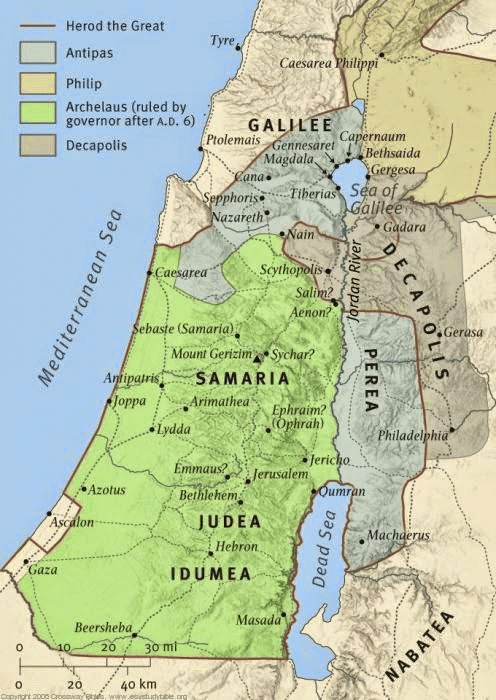
John 6:22 The next day the crowd that had stayed on the opposite shore of the lake realized that only one boat had been there, and that Jesus had not entered it with his disciples, but that they had gone away alone. 23 Then some boats from Tiberias landed near the place where the people had eaten the bread after the Lord had given thanks. 24 Once the crowd realized that neither Jesus nor his disciples were there, they got into the boats and went to Capernaum in search of Jesus.
25 When they found him on the other side of the lake, they asked him, “Rabbi, when did you get here?”
26 Jesus answered, “Very truly I tell you, you are looking for me, not because you saw the signs I performed but because you ate the loaves and had your fill. 27 Do not work for food that spoils, but for food that endures to eternal life, which the Son of Man will give you. For on him God the Father has placed his seal of approval.”
28 Then they asked him, “What must we do to do the works God requires?”
29 Jesus answered, “The work of God is this: to believe in the one he has sent.”
Commentary
The beginning of this event is following the feeding of the 5,000, meaning it was happening “meanwhile” with the last two passages we studied about Jesus walking on water and healing those who touched His clothes once He arrived to the shore. This story’s setting is importantly connected to the theme of bread, since it occurred during Passover, known as the Feast of Unleavened Bread. (When the Israelite slaves were freed from Egypt, they prepared unleavened bread to take on their journey, since they had to get ready so quickly that they didn’t have time for the bread to rise (Ex 12:8; 13:6-7) (The Word in Life Study Bible pg. 1877).) When the unleavened bread ran out, God later provided the Israelites daily manna, which they could not store for later, except in preparation for the Sabbath. Neither did Jesus allow this crowd to keep the leftovers from the miracle on the hillside. “Comp. Matthew 14:20, note [the fragments were on that occasion gathered up for future use as food, not, as the manna, merely for a memorial: the people were not to carry any away as a curiosity]. The barley harvest was immediately after the Passover; and immediately before the harvest, the price of provisions is usually dearer. Therefore, at that season of the year, His benefit conferred on the five thousand had been especially appropriate” (Bengel’s Gnomen, https://biblehub.com/commentaries/john/6-26.htm).
Remember that He fed the 5,000 and then went away to the mountain alone, since He saw that the people wanted to make Him king. While Jesus was alone on the mountain, the disciples had set out to cross the sea, but there was a storm, which made it difficult (if not impossible) for them to get across. Jesus walked out to meet them and calmed the storm, and then He transported them immediately to the other shore, where He was met by some people in need of healing. “The fact parenthetically introduced, John 6:23, that boats from Tiberias had put in on the east shore, is an incidental confirmation of the truth that a gale had been blowing the night before” (Expositor’s Greek Testament https://biblehub.com/commentaries/john/6-22.htm). The boats from Tiberias likely would not have landed there if they had not been forced to shore by a storm.
The opening lines in verse 22 have a complex sentence structure, which was not typical of John’s writing. Ellicott’s Commentary has a helpful explanation of the sequence of events. “They knew there was only one boat, and that the disciples had gone away in it, but Jesus had not. They expected therefore to find Him among themselves, but did not. Meanwhile, other boats had come across from Tiberias. From these they may have learnt that He was not there” (https://biblehub.com/commentaries/john/6-24.htm).
We rejoin the timeline of the two groups when the crowd from the other shore gets to Capernaum. They find Jesus in the synagogue, and they ask Him how He got there. “They said unto him, Rabbi; or “master”, a name now much in use with the Jewish doctors, and by which they delighted to be called; and these men being convinced by the miracle, that Christ was that prophet that should come, honour him with this title” (Gill’s Exposition of the Entire Bible https://biblehub.com/commentaries/john/6-25.htm ). Jesus does not undertake to prove Himself further by recounting the miraculous way He had crossed the sea. He can see that the people are entertained by His miracles, and because they don’t have an appreciation for the point of these signs, He does not gratify their curiosity. Instead, He rebukes them for their low motive of another meal, when their focus should be on the symbolism of the event and what it means for their eternal souls. “To everlasting life – The strength derived from the doctrines of the gospel is not exhausted. It endures without wasting away. It nourishes the soul to everlasting life. “They that wait upon the Lord shall renew their strength; they shall run and not be weary, and shall walk and not faint,” Isaiah 40:31” (Barnes Notes on the Bible).
These people had returned to Him because they were hungry again, and now they thought they knew an easy place to get some free food. They missed the point of that miracle and came back, looking for more bread, instead of the spiritual sustenance Jesus offered. Isn’t it interesting how often we receive an unexpected blessing and that thing so quickly becomes the expected standard? These people were so hyper-focused on getting another free lunch that they couldn’t open their ears to Jesus’s very obvious spiritual references. John’s writing, however, refers to the scene of the miracle as “the place where the people had eaten the bread after the Lord had given thanks.” This speaks to John’s understanding of the objective of the miracle. The focus is on Jesus giving thanks, and incidentally, some people got some bread to eat. The Father honored Jesus’s gratitude and sealed His approval by miraculously multiplying the food to feed the crowd.
Many commentaries remark on the use of the word “sign” rather than miracle in verse 29. Some translations use the word “miracle,” but “sign” is the more accurate translation and has the important connotation of being a demonstration of Jesus’s legitimacy. “His authority to give everlasting life rested in the seal (testimony) of the Father through His signs and miracles” (Nelson KJV Bible Commentary pg. 1308). “Sealing a writing is a mark of the authenticity of it. God the Father sealed his Son, or manifested that he had commissioned him to be the Teacher, Redeemer, Saviour, and Governor of his church, by causing his Holy Spirit to rest on him, by the voice from heaven uttered once and again, and by the testimony he bore to him in signs and wonders” (Meyer’s NT Commentary https://biblehub.com/commentaries/john/6-25.htm).
To their credit, the people seemed humbled by Jesus’s rebuke because “they supposed him to be the Messiah, and they sincerely desired to be taught the way of life; yet it is observable that they expected to find that way as other sinners commonly do – by their works. The idea of doing something to merit salvation is one of the last that the sinner ever surrenders” (Barnes’ notes on the Bible). Tradition told these people there was something they needed to do in order to be saved, but Jesus tells them the “work” is to believe in Him. “The work is not something man does for God, but it is the act of receiving what God has done for man” (Nelson KJV Bible Commentary pg. 1308). Note the contrast between the plural “works” in the question from verse 28 versus Jesus’s singular reply. The crowd were looking for commandments to fulfill or some checklist to complete, but in some ways acknowledging that Jesus is the Christ is the hardest work of all. Placing your entire life and the fate of the whole world on the shoulders of one man is extremely difficult, especially against the pressure of a culture that tries to convince you otherwise. Having faith requires courage, trust, discernment, and a willingness to take the leap from the known into the unknown.
The act of faith as “work” is challenging to understand. Having faith doesn’t seem as though it takes a lot of effort. However, if you consider faith in God as an implicit trust, which demands a denial of yourself, faith becomes much more challenging. If I have faith that a chair will hold me up, there is a point in sitting down when I forfeit my strength and balance to rely on the chair. That’s why I would fall completely over if the chair broke or if someone pulled it out from under me; I am no longer standing on my own strength, but in faith relying on the chair. God is like a chair that will never break or move, and to have faith, we must daily, hourly remind ourselves to sit down and give up our control. “Labour not – This does not mean that we are to make no effort for the supply of our wants (compare 1 Timothy 5:1; 2 Thessalonians 3:10), but that we are not to manifest anxiety, we are not to make this the main or supreme object of our desire.” (Barnes Notes on the Bible https://biblehub.com/commentaries/john/6-27.htm).
You may have noted that Jesus’s response in this case is different than the response He gave to the tax collectors in Luke 3:12-14. Even tax collectors came to be baptized. “Teacher,” they asked, “what should we do?” 13 “Don’t collect any more than you are required to,” he told them. 14 Then some soldiers asked him, “And what should we do?” He replied, “Don’t extort money and don’t accuse people falsely—be content with your pay.” We sometimes see differences in the Bible as contradictions, but often they are different because they are appropriately addressing different audiences. Where in Luke, Jesus was addressing undisciplined sinners in need of repentance, the people in this audience were used to a multitude of rules, and they believed they could check off their works one by one. The idea of faith as the singular work, constant and unmeasurable, was a huge paradigm shift for them. Faith will ultimately result in participation in rituals, laws, evangelism, and worship, anyway, because those things will then be manifested as an overflow of the confidence we have in everything God has told us to do; we have faith that His way is best. “We must be first, and then we shall do… But the true teaching is not that trust is a substitute for work, but that it is the foundation of work” (Mclaren’s Expositions, https://biblehub.com/commentaries/john/6-28.htm).
References
John 6:22
John 6:2 A large crowd followed Him because they saw the signs He was performing on the sick.
John 6:15 Then Jesus, realizing that they were about to come and make Him king by force, withdrew again to a mountain by Himself.
John 6:21 Then they were willing to take Him into the boat, and at once the boat reached the shore where they were heading.
John 6:23
Matthew 15:36 Taking the seven loaves and the fish, He gave thanks and broke them. Then He gave them to the disciples, and the disciples gave them to the people.
Luke 7:13 When the Lord saw her, He had compassion on her and said, “Do not weep.”
Luke 7:19 So John called two of his disciples and sent them to ask the Lord, “Are You the One who was to come, or should we look for someone else?”
John 6:1 After this, Jesus crossed to the other side of the Sea of Galilee (that is, the Sea of Tiberias).
John 6:11 Then Jesus took the loaves and the fish, gave thanks, and distributed to those who were seated as much as they wanted.
John 6:24
Matthew 14:34 When they had crossed over, they landed at Gennesaret.
Mark 6:53 When they had crossed over, they landed at Gennesaret and moored the boat.
John 6:17 got into a boat, and started across the sea to Capernaum. It was already dark, and Jesus had not yet gone out to them.
John 6:25
Matthew 14:34 When they had crossed over, they landed at Gennesaret.
Matthew 23:7 the greetings in the marketplaces, and the title of ‘Rabbi’ by which they are addressed.
Matthew 23:8 But you are not to be called ‘Rabbi,’ for you have one Teacher, and you are all brothers.
Mark 6:53 When they had crossed over, they landed at Gennesaret and moored the boat.
John 4:31 Meanwhile the disciples urged Him, “Rabbi, eat something.”
John 6:26
John 6:2 A large crowd followed Him because they saw the signs He was performing on the sick.
John 6:14 When the people saw the sign that Jesus had performed, they began to say, “Truly this is the Prophet who is to come into the world.”
John 6:27
Proverbs 9:5 “Come, eat my bread and drink the wine I have mixed.
Isaiah 55:2 Why spend money on that which is not bread, and your labor on that which does not satisfy? Listen carefully to Me, and eat what is good, and your soul will delight in the richest of foods.
Matthew 8:20 Jesus replied, “Foxes have dens and birds of the air have nests, but the Son of Man has no place to lay His head.”
Matthew 25:46 And they will go away into eternal punishment, but the righteous into eternal life.”
Luke 10:42 But only one thing is necessary. Mary has chosen the good portion, and it will not be taken away from her.”
John 3:15 that everyone who believes in Him may have eternal life.
John 3:33 Whoever accepts His testimony has certified that God is truthful.
John 6:29
John 3:17 For God did not send His Son into the world to condemn the world, but to save the world through Him.
Romans 4:5 However, to the one who does not work, but believes in Him who justifies the wicked, his faith is credited as righteousness.
1 Thessalonians 1:3 and continually recalling before our God and Father your work of faith, your labor of love, and your enduring hope in our Lord Jesus Christ.
James 2:22 You see that his faith was working with his actions, and his faith was perfected by what he did.

 On The Path